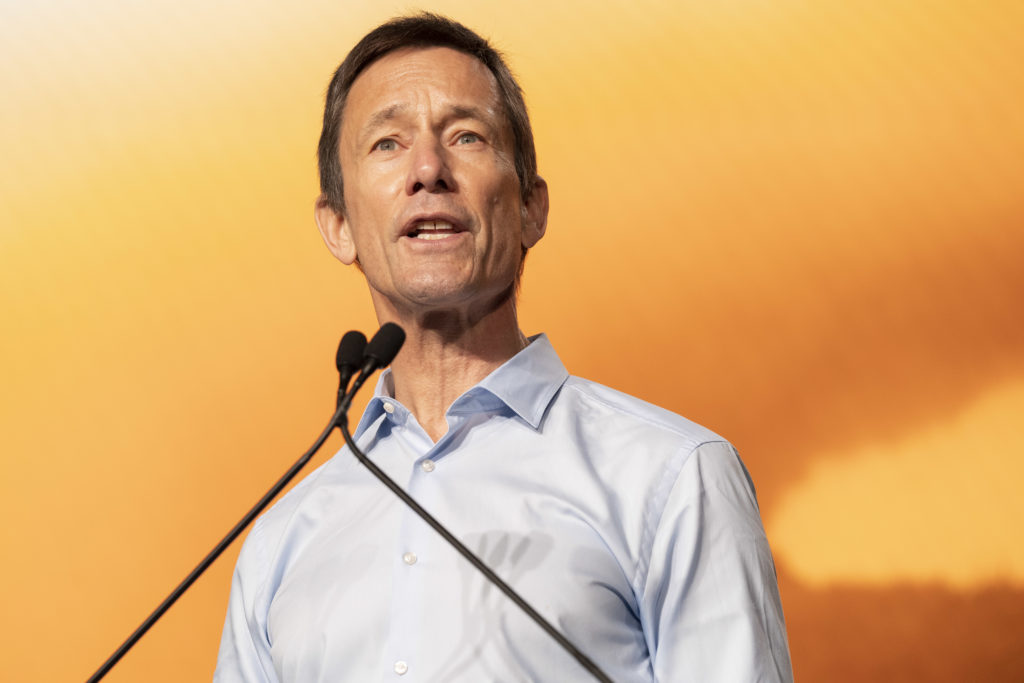
Marc Gunther’s Review: The Business Case for Nature
The value of nature is astonishing, when you stop and think about it. Marshes protect coastlands. Urban trees clean the air. Forests provide timber. Oceans give us seafood. Snow-capped mountains store drinking water. Some might say nature is priceless.
Not Mark Tercek, the former investment banker at Goldman Sachs who became CEO of The Nature Conservancy in 2008. His new book, Nature’s Fortune: How Business and Society Thrive by Investing in Nature (Basic Books, 2013), argues that nature provides enormous economic benefits to society, business and consumers, and that, if we can figure out how to value and pay for those benefits, we can slow down and even reverse the degradation of nature that threatens our well-being.
It’s an important and potentially controversial argument, as Tercek acknowledges. While the 20th century conservation was all about protecting nature from people, Tercek and some of his allies in the environmental movement would like the future to be about protecting nature for people. If nothing else, he argues, recognizing the economic value of nature will expand the base of the environmentalist beyond the white, college-educated and relatively affluent folk, the backpackers and hikers and birdwatchers at its core.
The Goldman banker turned environmentalist
Tercek came to TNC because it embodies the idea that traditional hostilities between environmentalists and business can be overcome in a way that benefits both nature and annual profits.
This may sound unlikely. But he shows that a growing number of companies claim to recognise that protecting nature is good for their bottom lines in a world with worrying levels of resource scarcity.
Once businesses see evidence of a “bottom-line pay-off” from investing in natural assets, they will change their practices to favour nature, he says.
It is so far unproven, despite the hundreds of sustainability reports issued by the world’s leading companies each year. But if accounting for natural capital ever does become conventional corporate wisdom, Tercek has a point; and in the meantime, his arguments are very much worth reading.
Nature’s Fortune featured in Thomas Friedman’s NYT column
In his Sunday New York Times column, Tom Friedman writes about the proposed Keystone XL pipeline and includes a reference to Nature’s Fortune.
From Friedman’s column:
“Finally, the president could make up for Keystone by introducing into the public discourse the concept of “natural infrastructure,” argues Mark Tercek, the president and chief executive of The Nature Conservancy, and the co-author of “Nature’s Fortune: How Business and Society Thrive by Investing in Nature.”
“’Forests, wetlands and other ecosystems are nature’s infrastructure for controlling floods, supplying water, and doing other things we need to adapt to climate change,” Tercek wrote in an e-mail. “Before Hurricane Sandy, Cape May, N.J., had the foresight to restore its dunes and wetlands to provide storm protection and wildlife habitat. When Sandy struck, Cape May was spared the damage that neighboring towns suffered.’”
Cuomo’s Flood Zone Plan
Gov. Andrew M. Cuomo of New York has proposed a buyout program that is a significant step toward a more resilient future. By providing an option for people who wish to relocate from highly vulnerable places and enlisting nature as the first line of defense from future storms, he is accomplishing two very important goals.
My Perfect Adventure
Corporate giants like the Dow Chemical Company or the Coca-Cola Company might seem like surprising allies for eco activists. Their businesses have left huge environmental footprints, for sure, but that’s why one of the world’s biggest conservation groups, The Nature Conservancy, wants to collaborate with them: to help them change their ways in a bid to reduce their impact on natural resources.
Tree-Hitter Tercek Channels Goldman at Nature Conservancy
On the day in May 2008 when Mark Tercek, a managing director at Goldman Sachs Group Inc. (GS), got a cell-phone call from a headhunter informing him that he’d likely gotten the job of running the Nature Conservancy, he was so excited that he backed his Jeep Grand Cherokeeinto a tree, shattering the back window. Anxious that gouging a tree might be a bad omen, he jumped out to see how bad it was. To his relief, he’d done far more damage to his vehicle than the tree.
The Next 60 Years
He admits to “coming from a different kind of background.” Mark Tercek, president and CEO of The Nature Conservancy, was a city kid, a Boy Scout in Cleveland whose explorations included the famously flammable Cuyahoga River. After graduating from Williams College in 1979, he lived for several years in Japan, where he began his career in finance and studied martial arts. He then earned an MBA from Harvard University and embarked on a career with investment-banking colossus Goldman Sachs. Fair to say, he knows the art of the deal.
Outside Magazine Power List
Yes, Ted Turner owns two million acres in North America. Kris and Doug Tompkins have protected more than two million in Chile. But the world’s largest, wealthiest conservation organization, TNC, has preserved some 119 million acres (count ’em!) in more than 30 countries. Since taking the reins in 2008, Mark Tercek, 54, a former Goldman Sachs managing director who headed its Environmental Strategy Group and Center for Environmental Markets, has weathered a recession that saw TNC’s war chest dip by more than $257 million; spearheaded the conservancy’s expansion into Africa; and cut funding from foundering programs in places like Panama and Guatemala to emphasize big-idea initiatives like an international water fund and a program that gives indigenous people a say in local conservation. He also brought discipline to the organization following a 2003 Washington Post investigation that led to an IRS audit. In meetings, he’s known for repeating (and repeating) his mantra, “Focus like a laser.”
Natural Causes
Nearly two years ago, Mark Tercek left his job as a managing director at Goldman Sachs to attend to an ecosystem devoted to another kind of green: the Nature Conservancy. TNC, which watches over 119 million acres of land in more than 30 countries, has a significantly different culture from the one he’d dominated on Wall Street. While conducting his first organization-wide online meeting in 2008, Tercek swigged from a Poland Spring water bottle. The next day, he was greeted by half a dozen welcome gifts from colleagues in the form of reusable water containers. “Not so good to be the brand-new head of the biggest conservation organization and drinking out of a plastic water bottle,” he says.